
Earn 2% back on dining, subscriptions, and entertainment with zero annual fee
Rates, fees, and offers
Interest starts immediately at 21.9%
If balance paid in full by due date
Subject to credit limit and approval
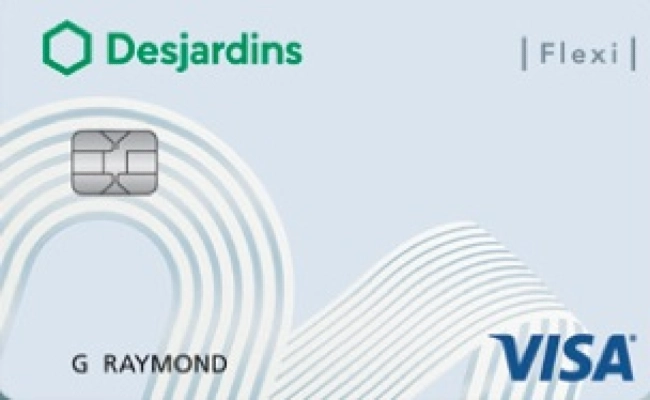
Desjardins Cash Back Visa Card Overview
The Desjardins Cash Back Visa Card is a no-annual-fee cash back card designed for Canadian consumers who spend regularly on dining, subscriptions, entertainment, and local transportation. You’ll earn 2% cash back in these specific categories (with annual spending caps on restaurants and pre-authorized payments), plus 0.5% on everything else. What makes this card refreshingly simple is the automatic redemption: once your rewards hit $25, Desjardins credits your account without you lifting a finger—no points portals, no complicated redemption math.
If you’re tired of rewards programs that feel like homework, this card removes the friction. The earning structure matches real-world spending patterns: your Netflix subscription, weekly brunch habit, concert tickets, and Uber rides all earn the elevated 2% rate. And unlike many free cards that skimp on protection, this one includes mobile device insurance up to $1,000, plus purchase protection and extended warranty coverage—perks you’d normally expect from cards charging annual fees.
The travel insurance is where things get less impressive. Coverage is capped at 3-day trips, which makes it more of a ‘weekend getaway’ card than a serious travel companion. If you take longer vacations or travel frequently, you’ll want supplemental coverage. But for Canadians who prioritize everyday cash back over travel perks and don’t want to pay an annual fee for the privilege, this card delivers exactly what it promises with minimal hassle.
Top features & our take
🍽️2% Cash Back on Restaurants
- Earn 2% back on dining purchases up to $3,600 in annual spending, then the rate drops to 0.5%.
- That cap means you earn the full 2% on $72 in rewards, which is solid if you dine out regularly but don’t hit fine dining every week.
- Most no-fee cards offer flat 0.5-1% on everything, so the elevated restaurant rate is a real differentiator if eating out is part of your routine.
🔁2% on Pre-Authorized Payments
- Earn 2% on recurring bills and subscriptions up to $3,600/year, then 0.5%—this includes phone plans, streaming services, gym memberships, and insurance premiums when set up as automatic payments.
- This is quietly brilliant because these are expenses you’re paying anyway, every month, without thinking. Just set them to this card and you’re earning double.
- The cap is shared with restaurants, so if you max out both categories, you’ll hit 0.5% faster than you might expect. But for most people, $3,600/year across both is plenty of headroom.
🎟️2% Cash Back on Entertainment
- Earn 2% on entertainment purchases like movie theatres, concerts, amusement parks, and live events—with no stated annual cap.
- If you’re a regular concert-goer or take the family to events, this adds up faster than you’d think.
- Entertainment is a bonus category most no-fee cards ignore entirely, so this is a nice touch for people who actually use it.
📱Mobile Device Insurance
- Coverage up to $1,000 per claim if you either buy the phone with the card or pay both the upfront cost and your monthly wireless bill with the card.
- This is genuinely useful protection for a no-fee card—most Canadians carry expensive smartphones, and repair costs or replacement can hit hundreds of dollars.
- Read the terms carefully to understand what qualifies and how to file a claim, but having this backstop is a real money-saver if something happens.
🧳Travel Insurance for Short Trips
- Emergency medical coverage up to $5,000,000 per person (ages 75 and under), plus some trip cancellation, interruption, and baggage coverage.
- The catch: it’s capped at 3-day trips. That makes it fine for weekend getaways to the US or quick road trips, but useless for longer vacations.
- If you travel more than a few days at a time, you’ll need to buy supplemental coverage or use a different card—this shouldn’t be your primary travel insurance solution.
How Desjardins Cash Back Visa can help you improve your credit score
This card reports your account activity to both Equifax Canada and TransUnion Canada, which means consistent, on-time payments will help build or strengthen your Canadian credit profile. Payment history is the single biggest factor in your credit score (roughly 35% of the calculation), so the best thing you can do is set up automatic payments for at least the minimum amount due. Then pay the rest manually when you can. Even one missed payment can ding your score for months, so automation removes that risk.
Credit utilization—how much of your available credit you’re using—is the second-biggest factor (around 30% of your score). Experts recommend keeping your balance below 30% of your credit limit, but lower is even better. If your limit is $2,000, try to keep the balance under $600 before your statement closes. Since this is a cash back card, you might be tempted to rack up rewards, but if you’re carrying high balances relative to your limit, that can actually hurt your score even if you’re paying on time.
One often-overlooked benefit of a no-fee card like this: you can keep it open long-term without worrying about annual costs. Credit age matters—the longer your accounts stay open and in good standing, the better your score looks. Even if you eventually get cards with better rewards, keeping this one active (just use it for a small recurring bill and set it to autopay) can help your credit history look more established. Just don’t close it after a year or two unless you have a specific reason, because that can shorten your average account age and potentially lower your score.
Pros and Cons
Pros
- ✔ No annual fee means you can keep this card forever without ongoing costs
- ✔ 2% cash back on dining, subscriptions, entertainment, and transit—categories that match real-world spending
- ✔ Automatic cash back redemption at $25 removes the hassle of tracking and redeeming points
- ✔ Mobile device insurance up to $1,000 is rare for a no-fee card and genuinely valuable
- ✔ Purchase protection and extended warranty coverage add extra peace of mind
- ✔ No stated minimum income requirement makes approval more accessible
Cons
- ✖ No welcome bonus, so you’re not getting a head start on rewards like you would with some competitors
- ✖ Only 0.5% cash back on ‘everything else’ purchases—that’s lower than flat-rate cards offering 1-1.5% across the board
- ✖ Annual caps on restaurants and pre-authorized payments ($3,600 combined) mean heavy spenders drop to 0.5% faster
- ✖ 2.5% foreign transaction fee makes this a poor choice for international purchases or travel
- ✖ Visa isn’t accepted at Costco in Canada (Costco is Mastercard-only), so you’ll need a different card for warehouse shopping
Who can benefit — and who should look elsewhere
Who can benefit from this card?
- People who dine out regularly but not extravagantly—the 2% restaurant rate is perfect for weekly brunch or date nights without hitting the annual cap too fast.
- Subscription-heavy households paying for multiple streaming services, phone plans, gym memberships, and insurance premiums through pre-authorized payments—you’re earning 2% on bills you’d pay anyway.
- Canadians who want mobile device insurance without paying $100+ annual fees for premium cards—this protection alone can justify having the card.
- Weekend travellers who take short 2-3 day trips and value basic travel insurance—just don’t rely on it for longer vacations.
- Anyone who hates complicated rewards programs and wants automatic cash back with zero effort—once you hit $25, Desjardins credits your account without you doing anything.
Who should look for a different product?
- Frequent travellers who take trips longer than 3 days—the travel insurance won’t cover you, and the 2.5% foreign transaction fee will eat into any rewards you earn abroad.
- Big grocery spenders looking for elevated rewards on food—there’s no grocery bonus category here, so you’re stuck at 0.5% for your biggest monthly expense.
- Costco-first shoppers who need a card for warehouse purchases—Visa isn’t accepted at Costco in Canada, so you’ll need a Mastercard for in-store shopping.
- Welcome bonus hunters who want a head start on rewards—this card doesn’t offer a sign-up bonus, while many competitors do.
How to apply
- Visit the official Desjardins credit card page and click ‘Apply’ for the Cash Back Visa Card. You’ll need to select your province of residence to start the application.
- Fill out your personal information including your name, address, date of birth, and contact details. You’ll also need to provide your Social Insurance Number for the credit check.
- Enter your employment and income information. While there’s no stated minimum income requirement, Desjardins will use this to determine your credit limit. Include your housing costs (rent or mortgage) as well.
- Submit your application and wait for a credit decision. Approval typically happens within a few business days, though some applications are approved instantly. Desjardins will pull your credit report from Equifax Canada and/or TransUnion Canada.
- If approved, your card will arrive in the mail within 7-10 business days. Activate it through Desjardins online banking or by calling the number on the sticker attached to the card.
- Set up online banking access if you don’t already have it, and consider enabling automatic payments for at least the minimum amount due. This protects your credit score from accidental missed payments and ensures you’re building positive payment history every month.
FAQ
Is there a welcome bonus or sign-up offer?
No. The Desjardins Cash Back Visa Card doesn’t offer a welcome bonus. Some competing no-fee cards offer $50-$100 in bonus cash back after hitting a spending threshold in the first few months, so if a sign-up bonus matters to you, this isn’t the card for that. That said, the ongoing rewards structure and insurance benefits can still make it worthwhile if the categories match your spending.
When and how do I get my cash back?
Cash back is automatically applied as a statement credit once your rewards balance reaches $25. You don’t need to log in, redeem points, or do anything manually—Desjardins handles it for you. This happens automatically as long as your account is open and in good standing. There’s no expiration on your cash back as long as you keep the card active.
Does cash back expire if I don’t use the card for a while?
No, cash back doesn’t expire as long as your account remains open and in good standing. That said, if you stop using the card entirely for an extended period, Desjardins could potentially close the account for inactivity (like any issuer would). To keep the account active and your credit history intact, it’s smart to use the card for at least one small recurring purchase every few months and set it to autopay.
Do foreign purchases earn cash back?
No. Foreign currency purchases are excluded from earning cash back entirely. On top of that, you’ll pay a 2.5% foreign transaction fee on any purchase made in a currency other than Canadian dollars. So if you’re traveling internationally or shopping from non-Canadian websites, you’re losing 2.5% instead of earning rewards. For foreign spending, you’d be better off with a no-foreign-transaction-fee travel card.
Will this card help my credit score?
Yes, as long as you use it responsibly. The card reports your account activity to Equifax Canada and TransUnion Canada, so on-time payments help build positive payment history (the #1 factor in your score). Keep your balance low relative to your credit limit (under 30% is ideal), pay at least the minimum on time every month, and let the account age over time. If you’re rebuilding credit or establishing it for the first time in Canada, this card can be a useful tool—just don’t carry a balance and pay interest chasing 2% rewards.
What counts as a ‘pre-authorized payment’ for the 2% rate?
Pre-authorized payments are recurring charges you’ve set up to bill automatically to your card—think phone plans, streaming subscriptions (Netflix, Spotify, etc.), gym memberships, insurance premiums, and utility bills if they support credit card payments. One-time purchases or manual payments don’t qualify. The key is that the merchant has your card on file and charges it automatically on a recurring schedule. If you’re not sure whether something qualifies, check your statement after a billing cycle to see how it’s categorized.
Can I use this card at Costco in Canada?
No. Costco Canada only accepts Mastercard for in-store purchases (along with debit cards and cash). Since this is a Visa card, you won’t be able to use it for warehouse shopping. However, you can use it online at Costco.ca if you shop there digitally. If Costco is a major part of your spending, you’ll need a Mastercard for in-store purchases—this card won’t work.
Is the mobile device insurance worth it?
It depends on your phone and how you use it, but for most people, yes. Coverage goes up to $1,000 per claim, which can cover repair costs or partial replacement if your phone is damaged, lost, or stolen. The catch: you generally need to either buy the phone with the card or pay both the upfront cost and your monthly wireless bill with it to qualify (check the exact terms). If you’re carrying a $800-$1,200 smartphone and don’t have separate device insurance, this coverage can save you hundreds of dollars. Just read the policy details so you know what’s covered and how to file a claim if needed.
Conclusion
The Desjardins Cash Back Visa Card is a strong no-annual-fee option for Canadians whose spending aligns with its 2% bonus categories—dining, subscriptions, entertainment, and local transportation. The automatic cash back redemption and mobile device insurance make it feel more premium than most free cards, and if you’re looking for a low-maintenance rewards setup that doesn’t require constant optimization, this delivers exactly that. It’s not trying to be everything to everyone, and that’s actually a strength: it knows its audience and serves them well.
That said, it’s not a travel card. The 2.5% foreign transaction fee and 3-day travel insurance cap make it a poor fit for frequent travelers or anyone who takes longer vacations. And if grocery spending is your biggest monthly expense, you won’t find bonus rewards here. But for people who eat out regularly, pay multiple subscriptions, and want phone protection without paying an annual fee, this card quietly outperforms its free-card competition.
If this matches your spending patterns, getting started is straightforward: apply through Desjardins’ website, set up autopay to protect your credit score, and start earning 2% on the categories that matter. Within a few months, you’ll see cash back credits appearing automatically on your statement—no points dashboards, no redemption gymnastics, just money back. It’s a keeper card you can hold onto long-term without guilt or fees, and sometimes that’s exactly what you need.
Leave a Reply